
From vision
to action

From vision
to action
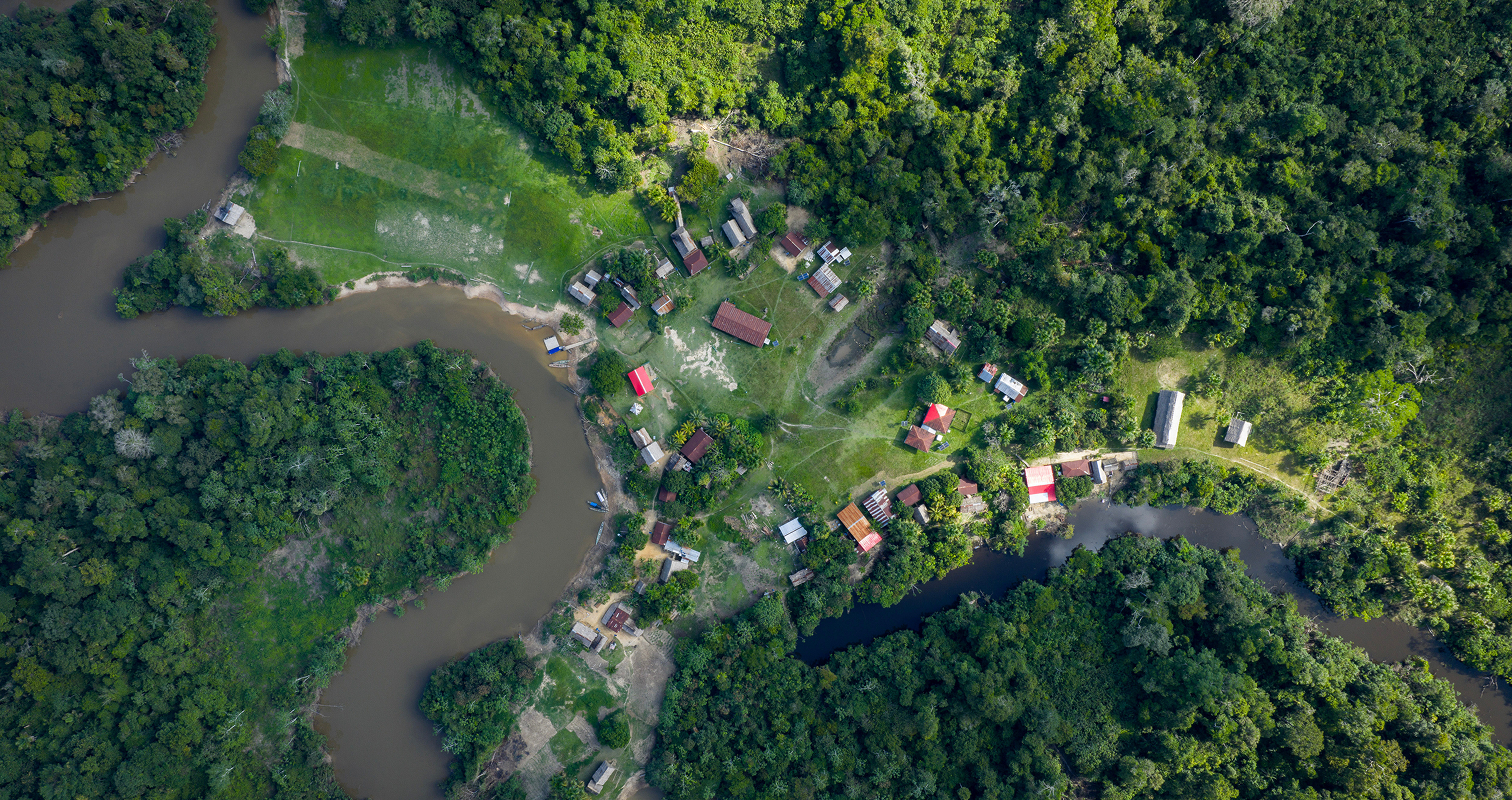
Forest conservation does not happen through a single action or from a single sector. It becomes possible when conditions are activated - together - that enable communities to live from their territories without degrading them. In Amanatari, we work alongside indigenous and local communities to connect science, economic opportunity and wellbeing - generating incentives that make long-term conservation of Amazonian biodiversity and cultures possible.
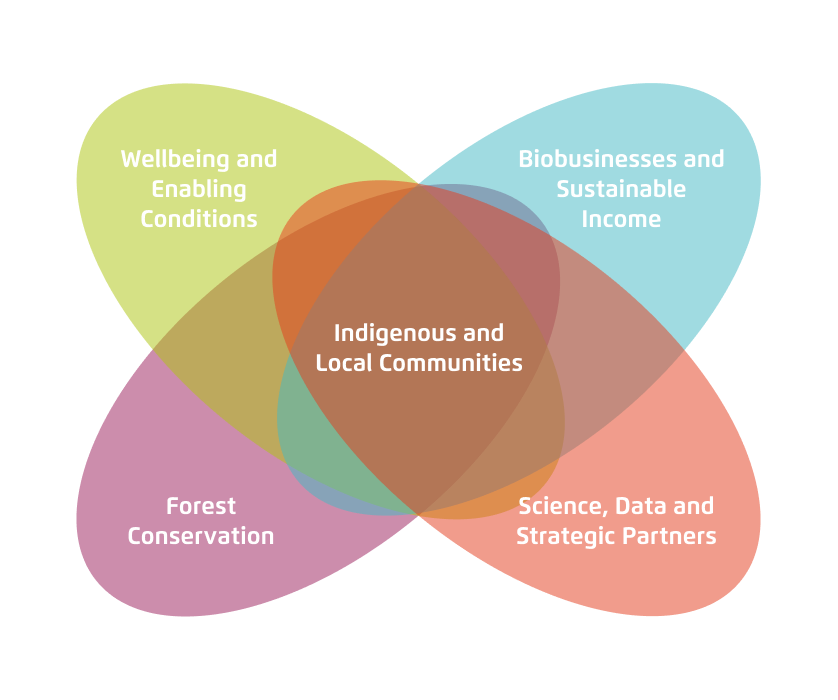
Communities are at the center. Our role is to activate and align these dimensions across each landscape—building what is missing and accelerating what already exists.
Every territory has distinct dynamics, capacities and challenges. That is why, at Amanatari, we engage strategically - , activating three interconnected lines of work that together, enable sustainable, long-term impact.
Science is key to generating evidence, strengthening decision-making and improving production systems linked to biobusinesses.
At Amanatari we advance applied research in partnership with universities, research institutions and strategic partners all working directly with indigenous and local communities.
Our work focuses on understanding the origin, traceability and value creation of non-timber Amazonian forest products. We generate scientific evidence on their impact on biodiversity conservation and community livelihoods.
We support and strengthen production and organizational processes under rigorous technical and environmental standards, connecting ancestral knowledge with world class science.
This evidence enables the development of models that are culturally relevant, replicable, and sustainable over time.
Forests are conserved when they generate tangible value for the communities that depend on them.
At Amanatari, we propel biobusinesses rooted in the sustainable use of biodiversity by local and indigenous communities – supporting production systems that respect the territory while strengthening local economies.
Our work focuses on building and strengthening sustainable value chains, improving production and processing systems, and connecting communities to commercial partners and responsible markets.
Origin validation and product traceability are essential to ensure that income is derived from standing forests and contributes to their long-term conservation.
Biobusiness lines under development
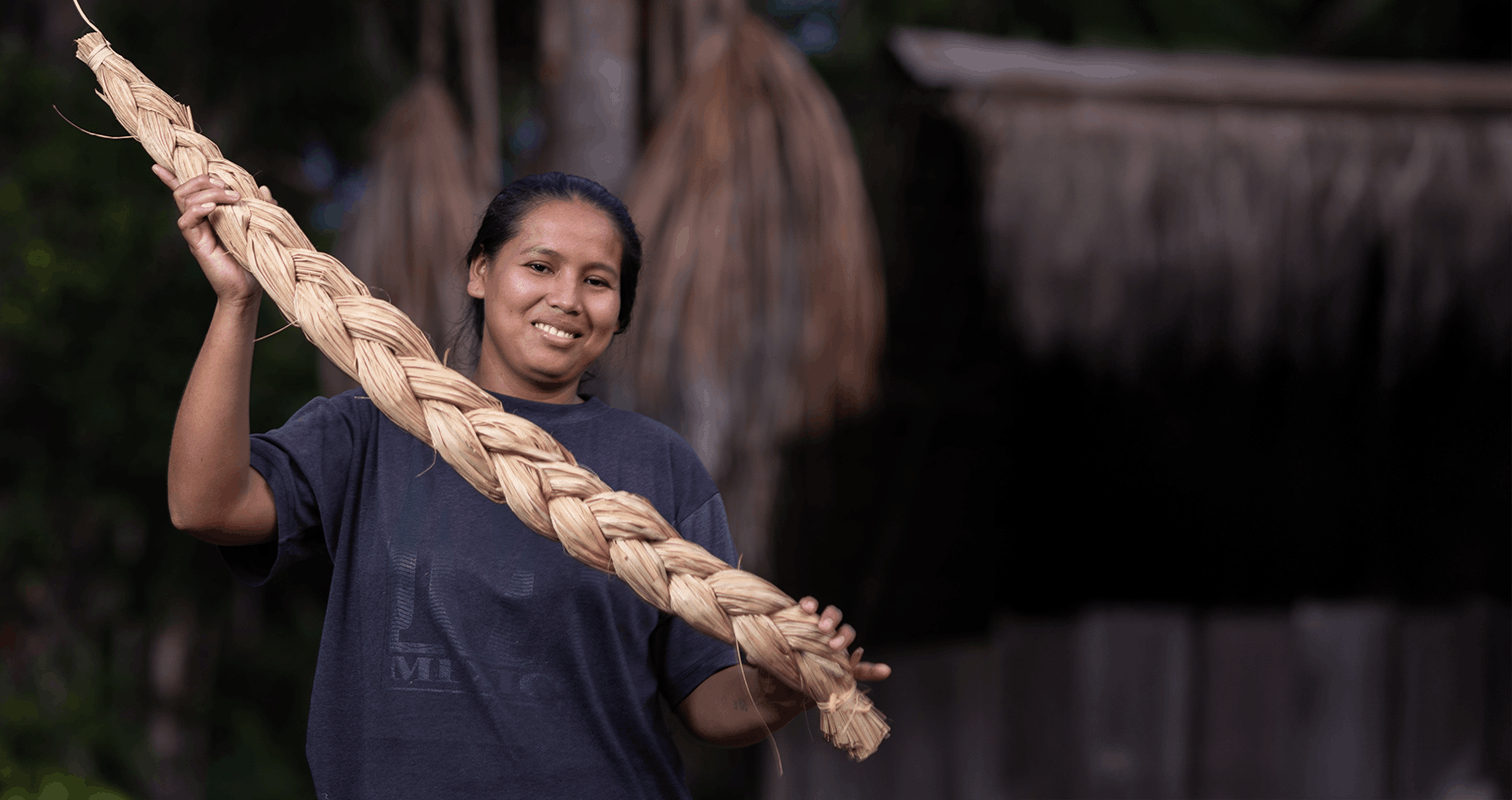
We support the sustainable use of plant-based fibers by integrating local knowledge, applied research, and technical validation to develop responsible, market-ready products.
Explore this project
We strengthen meliponiculture systems that generate income, promote forest conservation, and enhance local food security.
Explore this project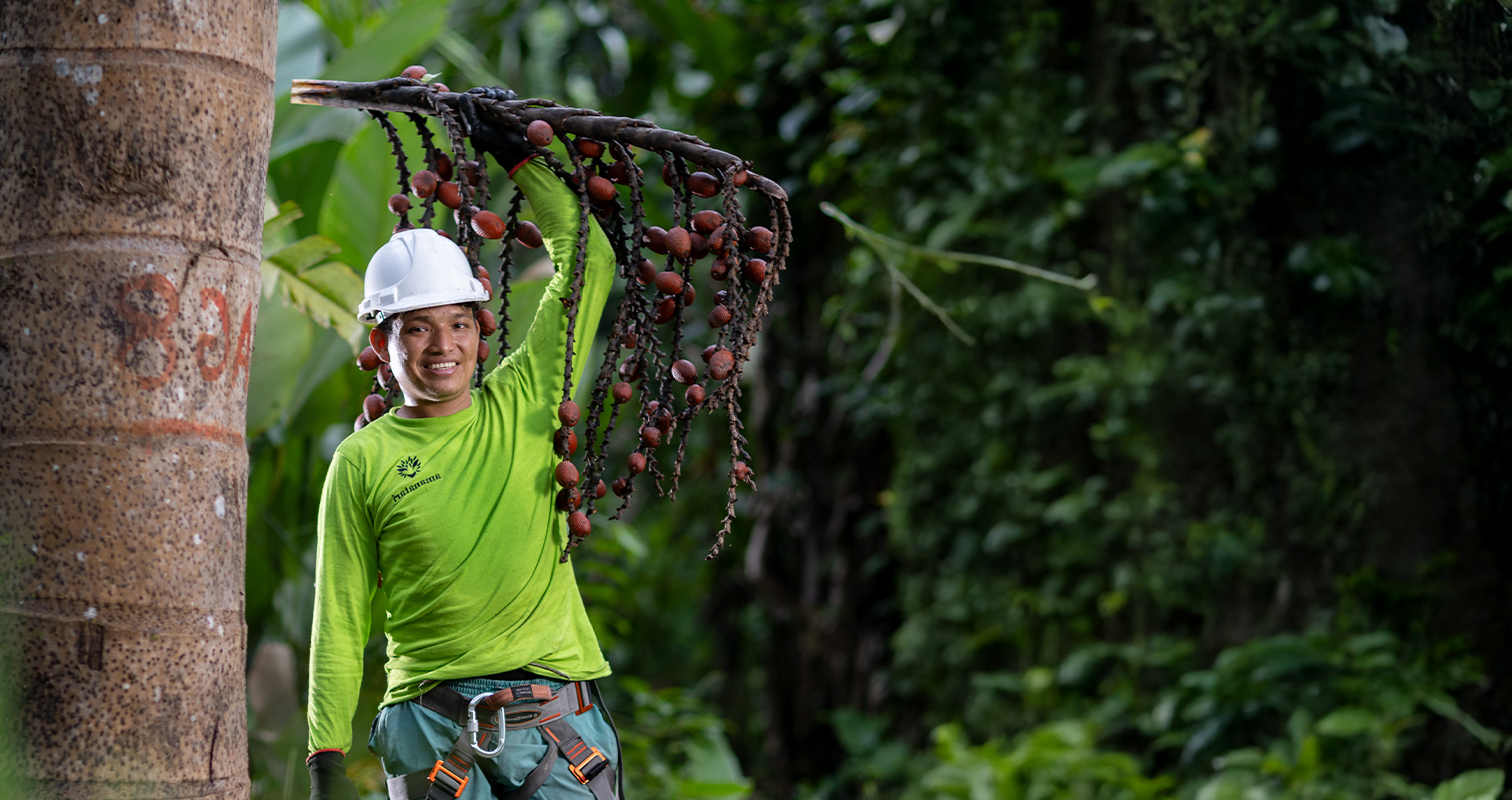
We advance the sustainable management of aguaje – one of the most abundant wild fruits in the Amazon – by developing value chains that integrate traceability, applied science, and access to responsible markets.
These initiatives are at different stages of development and form part of a dynamic portfolio that evolves alongside communities and their territories.
Wellbeing
and Enabling Conditions
Production and conservation processes are deeply shaped by the contexts in which they take place.
For these processes to be sustainable over time, they require the social, technical, and organizational conditions that enable them to function effectively.
At Amanatari, we work to strengthen these enabling conditions, so that our initiatives can generate holistic and integrated wellbeing in the communities and can be sustained beyond external support.
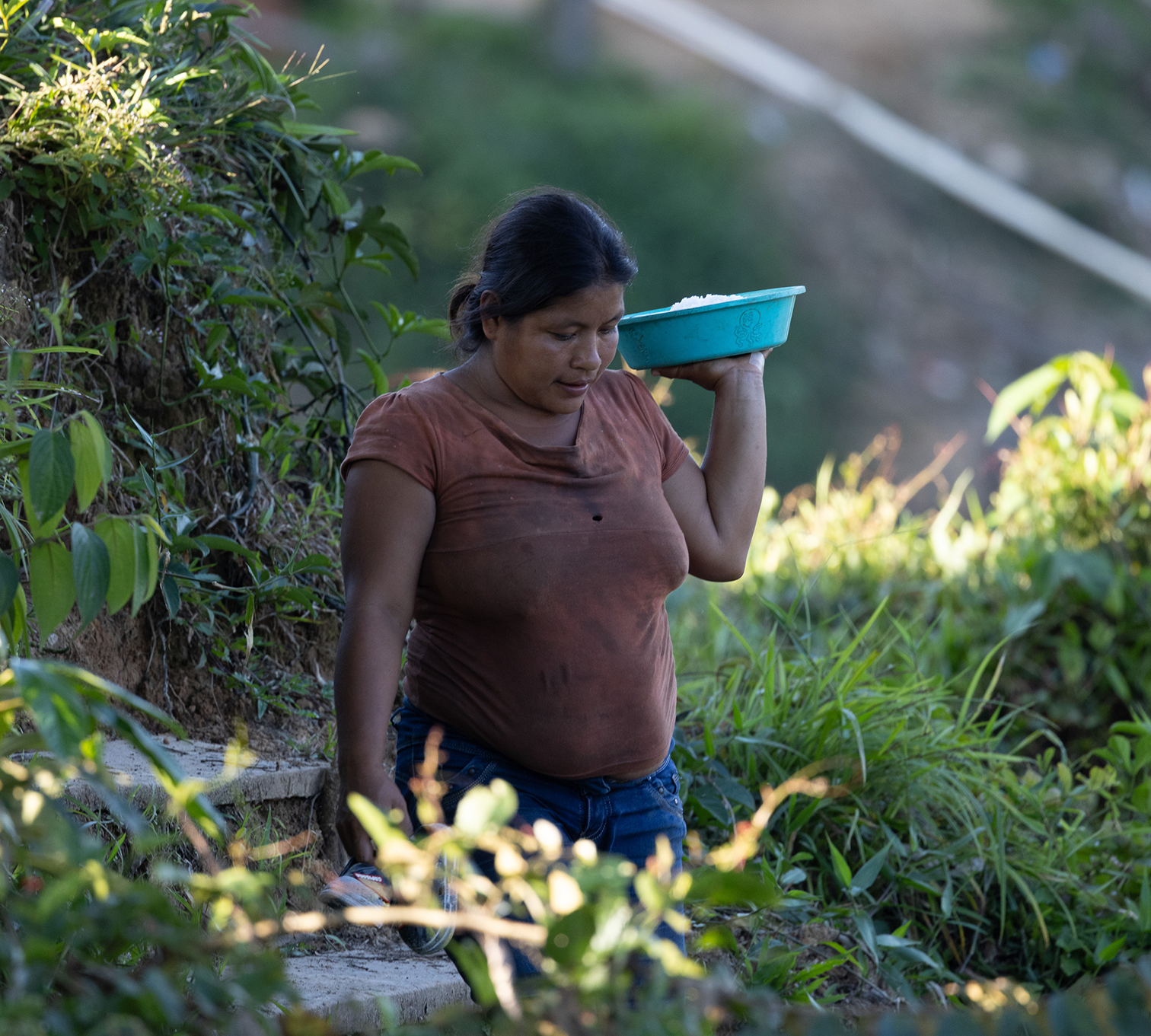
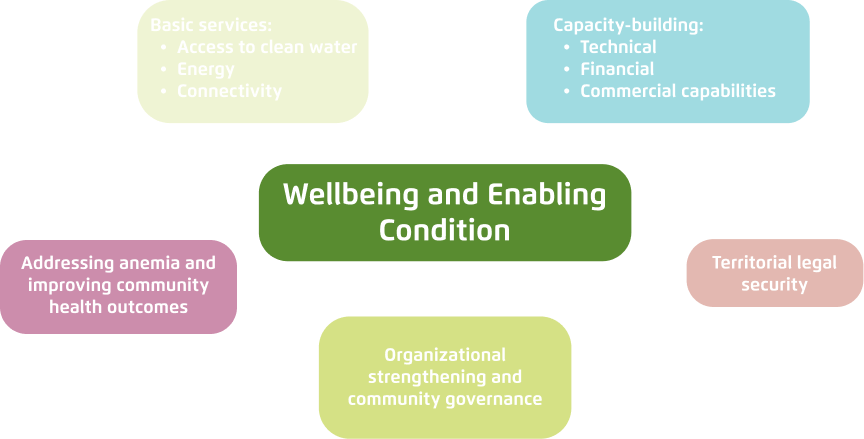
These dimensions translate into concrete enabling factors, including strong community organization, cultural relevance, secure rights, essential infrastructure, strategic partnerships, productive capacity, production and innovation, access to finance, and the empowerment of women and youth.
When these conditions are in place, biobusinesses can grow, generate sustainable income, and reduce pressure on the forest, making long-term conservation.
For Amanatari, conservation is not an imposition or a sacrifice. It is the outcome of processes that generate wellbeing and real opportunities for local and indigenous communities.
When enabling conditions are in place – such as sustainable income, strong local governance and access to basic services – protecting the forest becomes a viable and culturally relevant pathway for sustainable development.
This is the impact we seek to build together with communities and our partners.