A shared vision

Who we
are
For decades, Amazonian conservation has been approached through various perspectives including the creation of protected areas, policies and regulations or projects that have not always fully reflected the realities and aspirations of the people who live in its forests.
Amanatari was founded on a clear conviction: conservation is more sustainable when local communities can generate wellbeing living from standing forests.
That is why we work alongside Indigenous communities in the Peruvian Amazon to develop sustainable, income-generating alternatives that improve quality of life while strengthening the conservation of the territories they steward.
Across much of the Amazon, communities face complex decisions in sustaining their wellbeing. Protecting the forest frequently fails to generate sufficient income, while activities that degrade it can offer more immediate economic returns.
At the same time, the Amazon is approaching a critical tipping point; approximately 18% of the rainforest has already been lost, and deforestation continues to advance.
Crossing key thresholds could disrupt rain patterns, undermine food security and destabilize the livelihoods of millions of people.
For decades, a wide range of conservation initiatives have been deployed and yet the core challenge remains.
It is not from a lack of interest.
It is a question of building the right incentives.
Our approach is grounded on a clear idea: when standing forests generate income for the communities, protecting them becomes not only possible, but sustainable – and a culturally relevant pathway for development.
We facilitate processes that bring together communities, science and partners to build models that are both sustainable and scalable.
At Amanatari we intervene strategically at different stages of the development process, adapting to the context and existing capacities in each community.
In some cases, we incubate early stage initiatives, exploring promising resources and promising products while strengthening foundational living conditions, technical capacities and production processes.
In others, we build on existing processes, bringing applied science, technical validation, capacity building, strategic partnerships, and access to market opportunities that enable sustainable scaling.
Our goal is not to promote extractive use of the forest, but to support communities in generating greater value from their resources and knowledge.
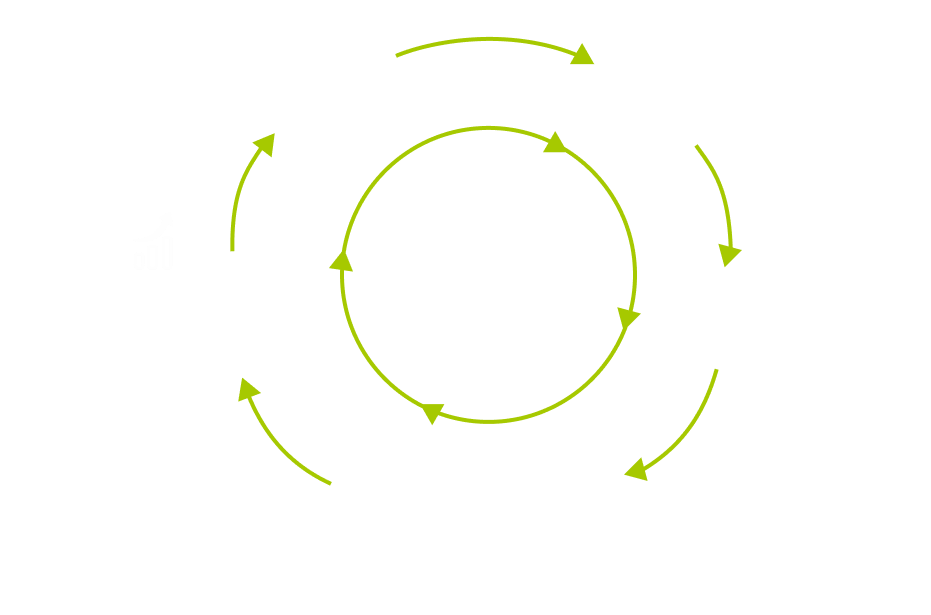
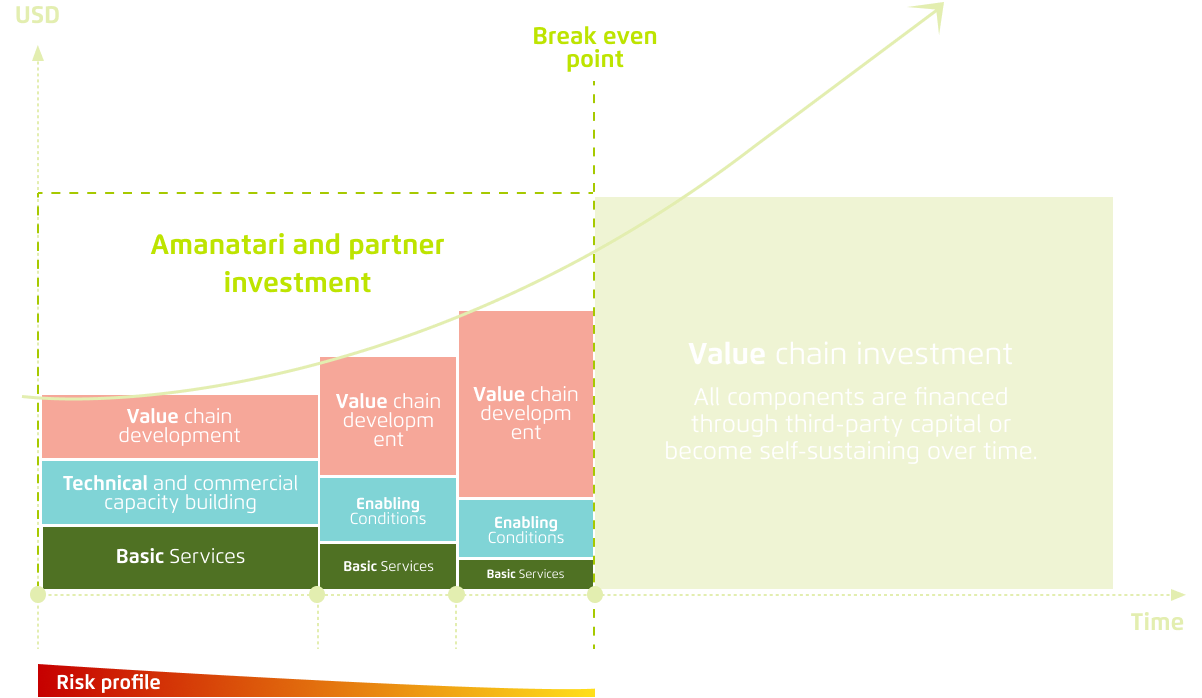
As local capacities consolidate, dependence on external support decreases.
Our role is catalytic – to accelerate critical stages until systems become financially and operationally self-sustaining.
We are a multidisciplinary team that combines deep expertise with on-the-ground experience, spanning community engagement,government relations, applied science, and private sector and donor integration.